


Minimalist Dining Spaces: How to Create Serene Interiors That Don’t Feel Cold
Minimalism in interior design has evolved far beyond the stark, impersonal spaces of early modernism. Today’s minimalist dining rooms embrace warmth, texture, and carefully curated pieces that create atmospheres of calm sophistication without sacrificing comfort or personality. The challenge lies in achieving that delicate balance—spaces that feel intentionally edited yet genuinely inviting.
The New Minimalism: Warmth Without Clutter
The minimalist dining room isn’t about deprivation; it’s about intention. Every element earns its place through either function, beauty, or ideally, both. This approach creates environments where you can actually breathe, think, and connect—qualities increasingly precious in our overstimulated world.
The key to preventing minimalist spaces from feeling sterile lies in layering natural materials, incorporating tactile elements, and choosing furniture with sculptural presence. When you reduce visual noise, the pieces you do include become more important. They need to carry their weight aesthetically while providing genuine comfort and utility.
Foundation Pieces: Tables That Anchor Your Space
Your dining table sets the tone for the entire room. In minimalist design, this central piece needs to make a statement through form and material rather than ornamentation. Look for tables with distinctive sculptural bases that create visual interest through geometry and negative space.
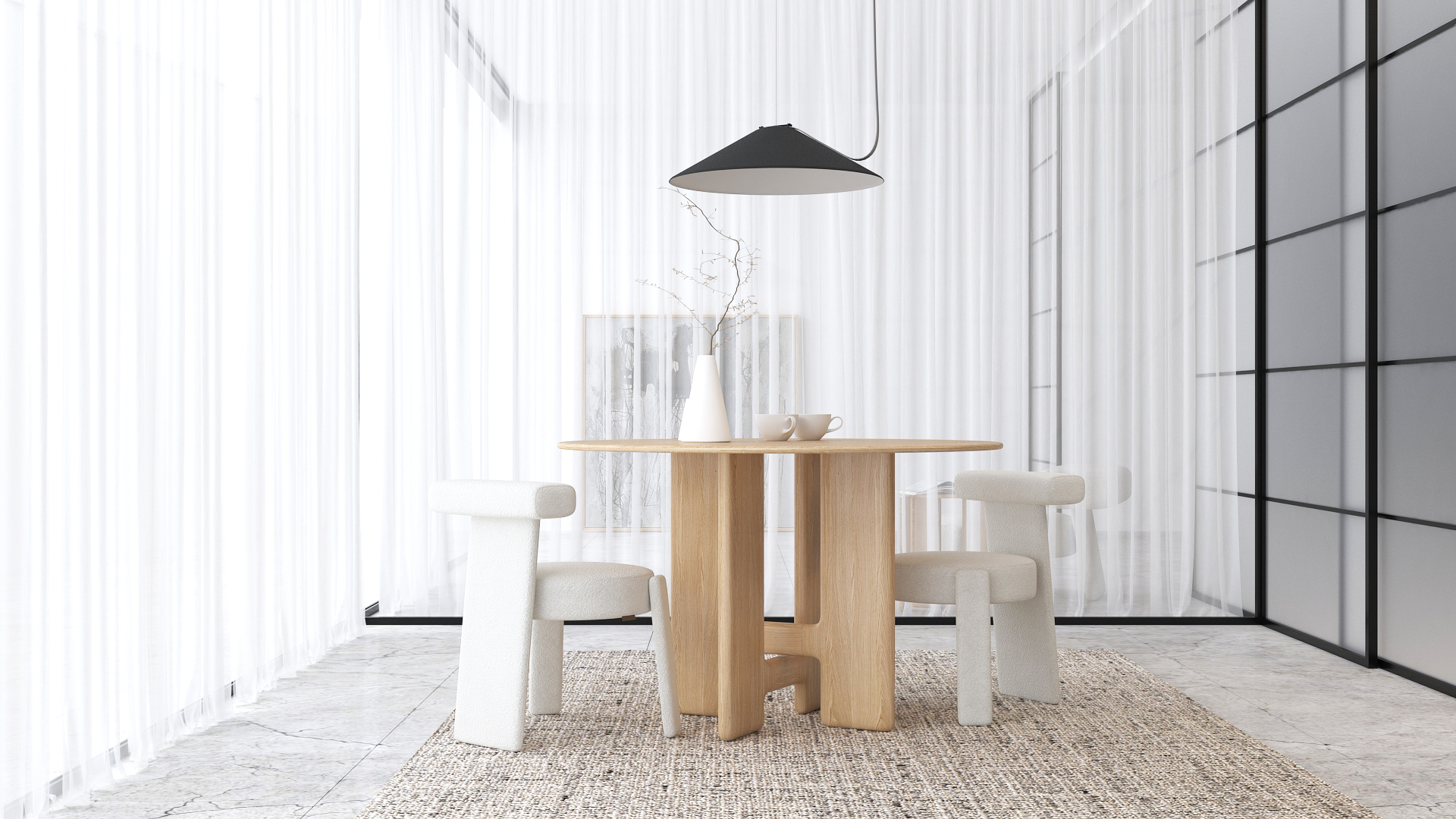
The Lukas Dining Table exemplifies this principle perfectly. Its architectural base—with massive rounded legs that converge at the center—provides monumental presence while the solid wood construction brings organic warmth. The natural grain patterns in ash or oak create subtle visual texture that prevents the space from feeling flat or cold. This is the paradox of successful minimalist design: bold, simple forms that reveal more complexity the longer you live with them.
Round tables work particularly well in minimalist dining rooms. The absence of corners softens the geometry of rectangular rooms, while the circular format naturally encourages conversation and connection. A 120cm diameter table seats 4-6 people comfortably without overwhelming a space, making it ideal for both intimate dinners and small gatherings.
Seating: Where Comfort Meets Sculpture
Dining chairs in minimalist interiors face a particular challenge. They need to be comfortable enough for extended meals and conversations, visually interesting enough to hold their own in an uncluttered space, yet cohesive enough not to create visual chaos when multiple chairs surround a table.
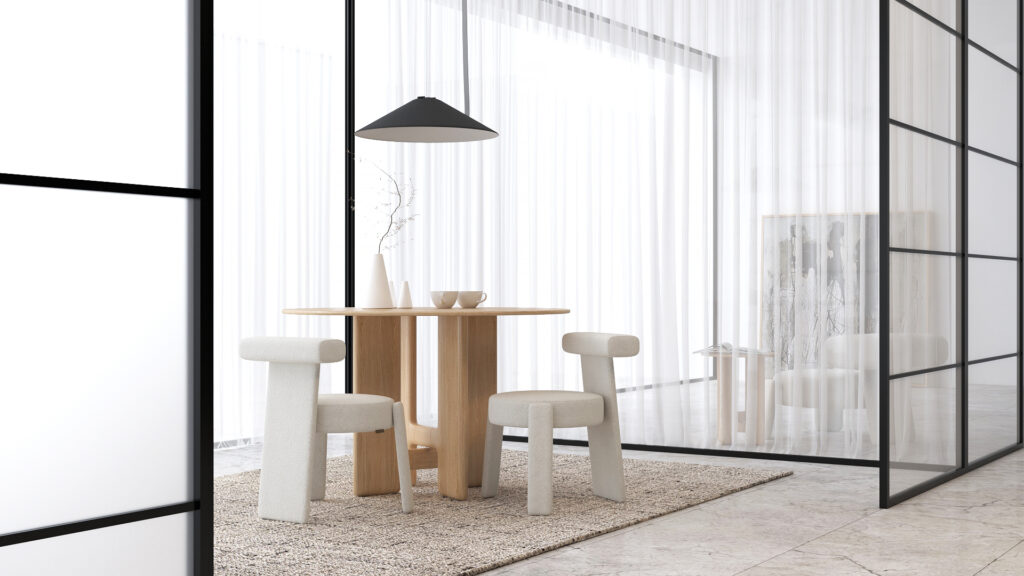
The Lukas Dining Chair demonstrates how furniture can be both architecturally bold and inviting. With its cylindrical upholstered form that appears to float within a geometric wood frame, the chair creates a striking visual statement. The thick, blocky wooden legs in rich-toned ash or oak provide structural drama, while the generously padded seat and backrest wrapped in premium bouclé fabric offer genuine comfort for lingering over meals and conversations.
This marriage of hard and soft elements—angular wood frames embracing rounded upholstered cushions—creates the visual tension that keeps minimalist spaces engaging. The contrast prevents monotony while maintaining the clean, uncluttered aesthetic essential to the style.
When selecting upholstery for minimalist spaces, texture becomes crucial. Bouclé fabric, with its nubby, tactile surface, adds dimension that flat materials can’t provide. The subtle irregularity of the weave catches light in constantly changing ways, bringing life to the space throughout the day as natural light shifts.
The Role of Natural Materials
Nothing warms a minimalist space faster than authentic natural materials. Solid wood furniture brings inherent variation—no two grain patterns are identical—that provides visual interest without additional decoration. The material itself becomes the ornament.
Oak and ash, both traditional furniture woods, offer distinct personalities. Oak’s pronounced grain and warm honey tones create immediate coziness, while ash’s lighter color and more delicate grain patterns feel contemporary and airy. Both develop beautiful patina over time, improving with age rather than deteriorating—a key consideration when investing in quality furniture.
Beyond wood, natural fiber textiles add crucial textural layers. A jute or sisal rug grounds the dining area, provides acoustic softening in hard-surfaced rooms, and introduces organic irregularity that contrasts beautifully with precision-crafted furniture. These materials don’t demand attention but quietly enrich the sensory experience of the space.
Lighting: The Minimalist’s Secret Weapon
In stripped-down interiors, lighting becomes dramatically more important. A sculptural pendant over the dining table serves multiple functions: it defines the dining zone within an open-plan space, provides necessary task lighting for meals, and acts as a focal point that draws the eye upward, expanding the perceived volume of the room.
Choose fixtures with strong geometric forms—cones, spheres, or angular shapes—that echo the architectural quality of your furniture. Matte black or brushed metal finishes maintain the restrained palette while providing visual weight that anchors the composition.
Consider the color temperature of your bulbs carefully. Warm white (2700-3000K) creates the inviting atmosphere essential for dining spaces, while cooler temperatures can make minimalist interiors feel clinical. Dimmers allow you to adjust mood from bright family dinners to intimate evening gatherings.
Color Palette: The Power of Restraint
Minimalist dining rooms typically revolve around a neutral foundation—whites, creams, grays, or natural wood tones—but this doesn’t mean colorless. The key is working within a tightly edited palette where each hue relates intentionally to the others.
A monochromatic scheme of warm whites and natural wood tones creates serene sophistication. The variation comes from material differences: the smooth grain of solid wood, the textured weave of upholstery, the crisp brightness of white walls, the soft drape of linen curtains. These subtle shifts in tone and texture provide visual interest without introducing pattern or bold color.
If you want to introduce accent colors, do so sparingly and thoughtfully. A single piece of ceramic in a distinctive glaze, a small arrangement of seasonal branches, or a carefully chosen art piece provides just enough chromatic interest without cluttering the visual field.
Negative Space: Your Most Important Design Element
Perhaps the most misunderstood aspect of minimalist design is the role of empty space. In cluttered rooms, furniture and objects compete for attention. In minimalist spaces, negative space allows each piece to breathe, to be fully appreciated, to perform its function without visual interference.
Don’t feel compelled to fill every corner or wall. The space around and between objects is as important as the objects themselves. This emptiness isn’t absence—it’s a conscious design choice that creates calm, improves circulation, and allows your carefully selected pieces to shine.
In dining areas, this means resisting the urge to add buffets, sideboards, or display cabinets unless they serve genuine functional needs. A single statement table with well-chosen chairs, perhaps a sideboard for actual storage needs, and thoughtful lighting may be all the room requires.
Bringing It Together: Cohesion Without Matchy-Matchy
While minimalist spaces embrace simplicity, they shouldn’t feel like furniture showrooms where everything matches perfectly. The goal is cohesion—a sense that pieces belong together through shared design language, material choices, or tonal relationships—without rigid uniformity.
Pieces from the same collection, like the Lukas series, naturally work together because they share design DNA: similar proportions, related geometric principles, complementary materials. The Lukas Dining Table and Lukas Dining Chair create harmonious pairings because both feature the same architectural vocabulary—sculptural rounded forms, substantial wood construction, and the interplay between solid structure and soft elements. This shared aesthetic language allows them to work together seamlessly while each maintains its individual character.
You can also expand the Lukas aesthetic throughout your space by incorporating other pieces from the collection. The Lukas Coffee Tables in various sizes can create cohesive living-dining zones in open-plan spaces, while the Lukas Armchair provides additional seating that speaks the same design language. Even the Lukas Mirror with its leaning wood frame carries through the collection’s distinctive approach to form and material.
Living Minimally: Beyond Aesthetics
Ultimately, minimalist dining spaces offer more than visual appeal. They create environments conducive to the activities that matter: sharing meals, engaging in real conversation, being present with the people around you. By removing visual distractions and unnecessary elements, these spaces help us focus on what’s actually important.
This isn’t about deprivation or following rigid rules. It’s about making conscious choices, investing in quality over quantity, and creating spaces that serve your life rather than demanding constant attention and maintenance. When done well, minimalist design doesn’t feel like sacrifice—it feels like relief.
The carefully composed dining space—with its sculptural table, comfortable chairs, thoughtful lighting, and breathing room—becomes a sanctuary from the chaos of modern life. It’s a place where design recedes just enough to let life take center stage, where beautiful objects enhance rather than overwhelm the experiences they host.
Explore the complete Lukas Collection to discover how sculptural design and natural materials can transform your dining space into a minimalist sanctuary that feels warm, welcoming, and distinctly yours.